The hardest question in any creative service business is: 'What should I charge?' Too high and you lose clients. Too low and you lose yourself. Tailors are especially prone to underpricing because the work feels personal — cutting fabric for someone feels different to writing a software invoice. But your time, skill, and materials are worth exactly what you demand for them, and this guide will show you how to calculate that number with confidence.
The True Cost of Making a Garment
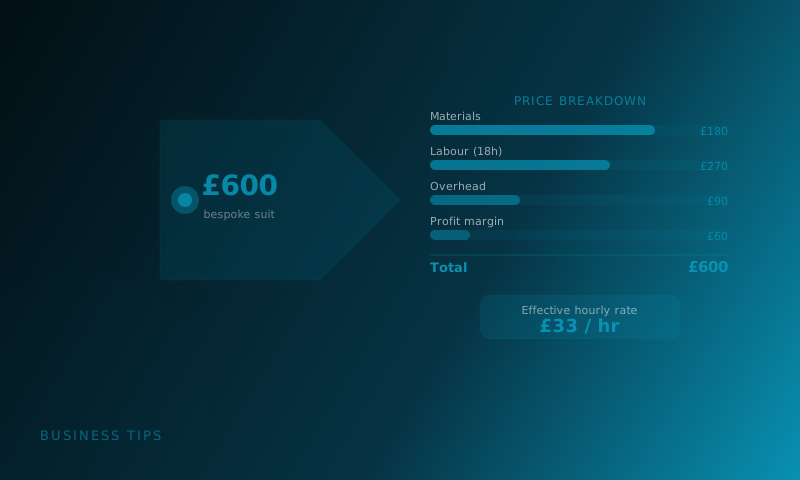
Before you can price, you need to know your costs. Every garment you make has direct costs (fabric, thread, buttons, interfacing, zips) and indirect costs (your studio rent or mortgage, electricity, machine maintenance, insurance, software subscriptions). Most tailors calculate the direct costs only — and then wonder why they never have a profitable month.
- Direct material costs: fabric, lining, notions, trimmings
- Time cost: every hour of design, cutting, sewing, fitting, and finishing
- Overhead allocation: studio, utilities, equipment depreciation per project
- Marketing and admin time: client communication, photography, bookkeeping
- Buffer for errors and rework: typically 10–15% of project value
Setting Your Hourly Rate as a Starting Point
Your hourly rate should support your desired annual income plus all business costs. Start by deciding what annual salary you need to live comfortably. Add your annual business overheads. Divide by the number of billable hours you realistically work each year (most service businesses achieve 60–70% billable utilisation at best). That is your minimum hourly rate.
(Target annual income + annual business costs) ÷ billable hours per year = minimum hourly rate. If you want £40,000 income, £8,000 in overheads, and work 1,200 billable hours — your rate must be at least £40/hr before profit.
Value-Based Pricing vs Cost-Plus Pricing
Cost-plus pricing (materials + time + margin) is the floor — the minimum you must charge to avoid losing money. Value-based pricing is the ceiling — the maximum clients will pay because of the transformation you deliver. A bespoke wedding dress is not priced on the hours it takes. It is priced on the emotional and social value it holds for the client.
As you build your reputation on Tailorte, your value-based ceiling rises. Reviews, portfolio quality, repeat clients, and niche specialisation all justify higher prices. A tailor known for Ghanaian kente wedding attire can charge premium rates that a generalist cannot — not because the fabric costs more, but because the expertise is rarer.
How to Communicate Price Without Apologising
Many tailors present their prices with hesitation — a trailing 'is that okay?' that invites negotiation. Instead, state your rate confidently and then briefly explain the value behind it. 'My bespoke suits start at £600, which includes two fittings, premium lining, and a lifetime of minor alterations.' The client knows exactly what they are getting and why it costs what it does.
Your price is the first signal of your quality. Clients who baulk at your rates are usually not your ideal clients.
— Tailorte Editorial Team
Packages, Deposits, and Protecting Your Time
Create tiered service packages: Essential (alterations and basic repairs), Standard (custom pieces with one fitting), and Premium (bespoke full garments with multiple fittings and priority scheduling). Packages make pricing transparent and help clients self-select into the right tier. Always take a deposit — typically 30–50% — before beginning any work. This protects you from last-minute cancellations and signals that the client is committed.
Ready to build a business profile that justifies premium pricing? Showcase your work on Tailorte and attract clients who value craftsmanship.
Build Your Profile