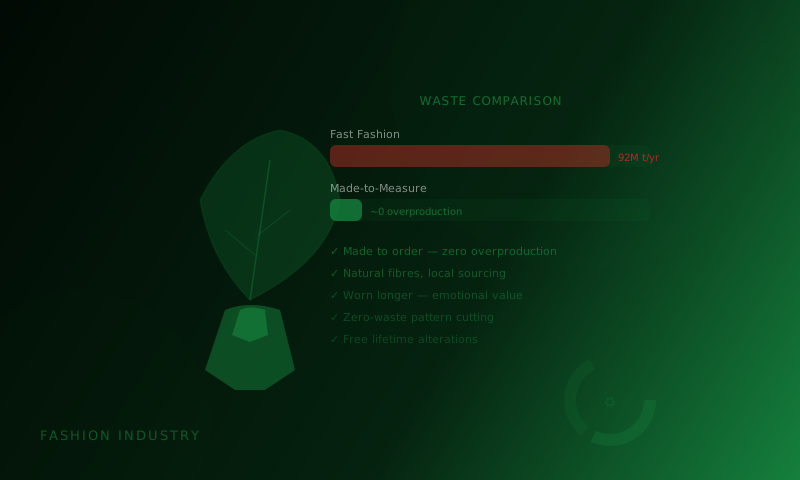
The fashion industry's sustainability problem is a production problem. When garments are made in batches of thousands with approximate sizing, waste is structurally inevitable — in overproduction, in returns, in discarded pieces that never sell. Made-to-measure tailoring inverts this model entirely: nothing is made until a specific person orders it, with their exact measurements, for a specific occasion.
Why Made-to-Measure Is Inherently Sustainable
A bespoke or made-to-measure garment has no overproduction waste by definition. The fabric is cut to specification, the fit is designed for the client's body rather than an average, and the resulting garment is worn more — because it fits perfectly, feels like it was made for you (it was), and holds emotional and monetary value.
Research consistently shows that consumers are far less likely to discard garments they had a hand in designing or commissioning. A bespoke suit or custom dress becomes part of a wardrobe story rather than a throwaway item. This is sustainable fashion in its most practical form — not a marketing label, but a structural reality.
Zero-Waste Pattern Cutting: The Tailor's Edge
Traditional straight-size pattern cutting wastes up to 15% of fabric in off-cuts. Many skilled tailors have developed zero-waste or near-zero-waste cutting techniques — arranging pattern pieces to maximise fabric use, using bias-cut techniques that naturally reduce waste, and repurposing off-cuts into accessories, linings, or embellishments.
Highlighting your zero-waste or low-waste cutting practice on your Tailorte profile and in your portfolio captions is an increasingly powerful client magnet. Environmentally conscious clients actively search for this.
Natural and Upcycled Fabrics: Building a Sustainable Sourcing Story
Where you source your fabrics is part of your sustainability story. Natural fibres (linen, cotton, silk, wool) biodegrade and have lower synthetic chemical loads than polyester or nylon. African textiles like kente, bogolan, and adire are typically hand-produced using natural dyes — they carry a sustainability provenance that mass-produced synthetics cannot claim.
- Source fabrics from certified organic or fair-trade suppliers where possible
- Work with deadstock fabric — surplus material from large fashion houses sold at a discount
- Offer an upcycling service: transform clients' existing garments into new pieces
- Document your sourcing process and share it on your profile and Steez posts
- Partner with local fabric markets to reduce shipping carbon footprint
Communicating Sustainability to Clients Without Greenwashing
There is a difference between genuine sustainable practice and marketing-speak. Be specific about what you actually do: 'I cut all garments to order, use locally sourced linen from Porto Alegre, and offer free lifetime alterations on any piece I make' is more credible than 'I believe in sustainable fashion.' Specificity builds trust.
Build a profile that attracts sustainability-conscious clients. Showcase your ethical practice on Tailorte.
Create Your Profile