Fashion has always been cultural — a reflection of who we are and who we want to be. But the channels through which culture travels have changed irrevocably. In 2026, social platforms aren't just marketing channels; they're the primary space where fashion taste is formed, communities coalesce, and purchasing decisions are made. Brands that treat social as an afterthought are competing at a structural disadvantage.
The Shift from Broadcast to Community
Traditional fashion marketing was broadcast: a brand created content, pushed it to an audience, and measured reach. The implicit relationship was one-directional — the brand spoke, the consumer listened (and hopefully bought). That model still works for legacy luxury houses with enormous budgets and decades of cultural capital. For everyone else, it's increasingly ineffective.
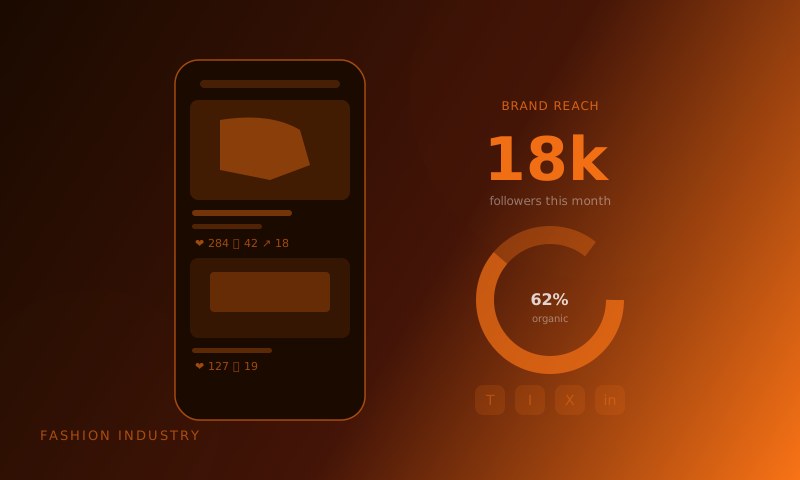
The social-first model inverts this relationship. Instead of broadcasting to an audience, you build a community around shared values, aesthetics, and aspirations. Your community becomes your distribution network, your testing ground, your most authentic marketing channel. When someone in your community shares your brand, they're lending their personal credibility to it — something no paid ad can replicate.
Platform-Native Content: Why Context Is Everything
One of the most visible mistakes fashion brands make is repurposing content across platforms without adapting it to each platform's native language. A campaign video shot for a TV commercial rarely performs well as a social post. Platform-native content — content conceived and produced specifically for the format, length, and culture of a specific platform — consistently outperforms adapted content.
On Tailorte, platform-native content means Steez posts that feel authentic to the fashion community on the platform — styling breakdowns, behind-the-scenes creation content, fabric sourcing stories, client transformations. Brands that understand this create content that feels like a natural part of the platform experience, not an interruption to it.
Develop a content calendar with at least three content pillars: educational (trend analysis, styling tips), aspirational (finished pieces, campaign imagery), and authentic (process content, team moments, raw creativity). Varying the register keeps your audience engaged rather than fatigued.
The Creator Economy and Why Fashion Brands Must Engage It
The creator economy has fundamentally redistributed cultural influence in fashion. Individual creators — stylists, designers, tailors with engaged audiences on platforms like Tailorte — now command levels of trust and influence that brands spend millions trying to buy. Smart brands aren't trying to compete with this; they're partnering with it.
Creator partnerships in fashion have evolved well beyond the influencer model of the early 2020s. The most effective partnerships are co-creative: brands collaborate with creators to develop limited pieces, exclusive colourways, or capsule collections that carry the creator's genuine aesthetic imprint. The result is content that creators share enthusiastically because they actually had a hand in making it.
Data-Led Creativity: Using Social Signals to Inform Design
Social platforms generate an enormous amount of real-time signal about what's resonating with fashion audiences. Which styles are being shared most frequently? Which colour stories are generating the most engagement? Which silhouettes are appearing across the feeds of your target demographic? Brands that read these signals and integrate them into their creative process have a meaningful advantage in product development.
This doesn't mean chasing trends blindly — that's a race to the bottom. It means using social intelligence to understand the cultural moment and create work that speaks to it with your brand's distinctive perspective. The signal informs the work; it doesn't replace the creative vision.
Building a Direct Client Relationship Through Digital Presence
One of the most strategically valuable outcomes of a social-first approach is the direct relationship it builds between brands and their clients. When clients follow your Tailorte profile, engage with your Steez posts, and book appointments through your platform page, you're building a first-party relationship that doesn't depend on third-party retailers, distributors, or algorithm-dependent platforms.
- Direct relationships give you richer client data and the ability to personalise communication
- Platform presence on Tailorte puts you in front of a fashion-specific audience already in buying mode
- Steez posts create a content archive that compounds in value over time
- Booking integration means social discovery converts directly into appointments and revenue
- Client records enable post-purchase follow-up and repeat business campaigns
- Reviews and social proof build organic credibility that reduces the cost of acquiring new clients
The Brands Getting It Right: Common Characteristics
The fashion brands winning with social-first strategy in 2026 share a recognisable set of characteristics. They post consistently but not compulsively. They engage with comments and build dialogue with their community. They collaborate with creators whose aesthetic genuinely aligns with theirs. They're transparent about their process and values. And critically, they think in terms of community first, sales second — understanding that the former drives the latter reliably over time.
The brands that last are the ones that make people feel something. Social media is just the fastest way to do that at scale.
— Tailorte Editorial Team
Build your brand's social presence on a platform built for fashion. Join Tailorte and connect with the clients, creators, and community your brand deserves.
Register Your Brand