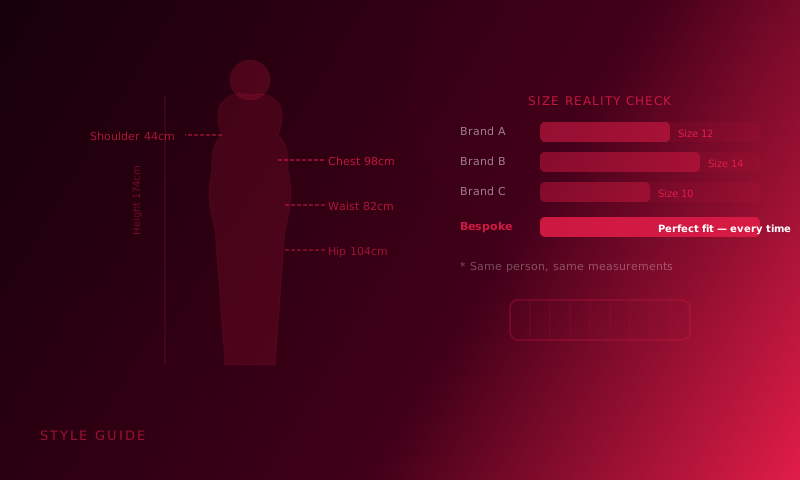
Here is something no fashion brand wants you to know: clothing sizes are arbitrary. A UK size 12 from one brand is a size 14 from another, a size 10 from a third. This is not inconsistency — it is a deliberate strategy called vanity sizing, where brands lower their numeric sizes to make customers feel better about themselves. It means the number on the label communicates almost nothing about fit.
The History of Standard Sizing (and Its Fundamental Flaw)
Standardised clothing sizes emerged in the 1940s and 1950s to enable mass production. Early size charts were based on measurements taken from young, largely White, mostly American women during World War II — a deeply unrepresentative sample. The resulting size standards have never been updated to reflect the actual diversity of human bodies.
The result: a system designed to fit a statistical average that barely exists in reality. Even someone who falls precisely on the average for chest and waist is unlikely to also have the average hip-to-waist ratio, arm length, rise length, and shoulder width simultaneously. Off-the-rack clothes fit the full human range poorly by design.
Why Bespoke and Made-to-Measure Are Categorically Different
Bespoke garments are made from scratch for one specific person's measurements. Made-to-measure takes a standard pattern and adjusts it to your dimensions. Both approaches produce garments that fit your actual body rather than a statistical average. The result is not just visual — clothes that fit perfectly are more comfortable, hang better, and photograph better.
Bespoke tailoring has nothing to do with size. Tailors work with all bodies, all proportions, all shapes. The magic of custom clothing is that it makes every body look exactly the way the person wearing it wants to look.
Getting Your Measurements Taken: What to Expect
- Wear form-fitting undergarments or clothes you would typically wear under the garment
- Stand naturally — not at attention, not slouched, just your usual posture
- A good tailor takes 15–20 measurements for a full garment, not just chest/waist/hip
- Measurements are typically taken twice and averaged to account for natural variation
- Update your measurements annually or after significant body changes
Commissioning Your First Bespoke Piece: A Starting Point
If you have never commissioned a custom garment before, start with something you wear regularly and that has always frustrated you in off-the-rack sizing. Suit trousers, a formal shirt, or a dress for a special occasion are excellent first commissions. The experience of wearing something made precisely for you tends to be revelatory — and most first-time clients become long-term clients.
Find a skilled tailor near you who can take your measurements and make something that actually fits. Book on Tailorte today.
Find a Tailor